Peripheral Artery Disease (PAD)
Peripheral Artery Disease is one of the most under-diagnosed conditions in cardiovascular medicine - and one we treat every day at MVM. If you have leg pain when walking, slow-healing wounds, or a known PAD diagnosis, we can help.
What is PAD?
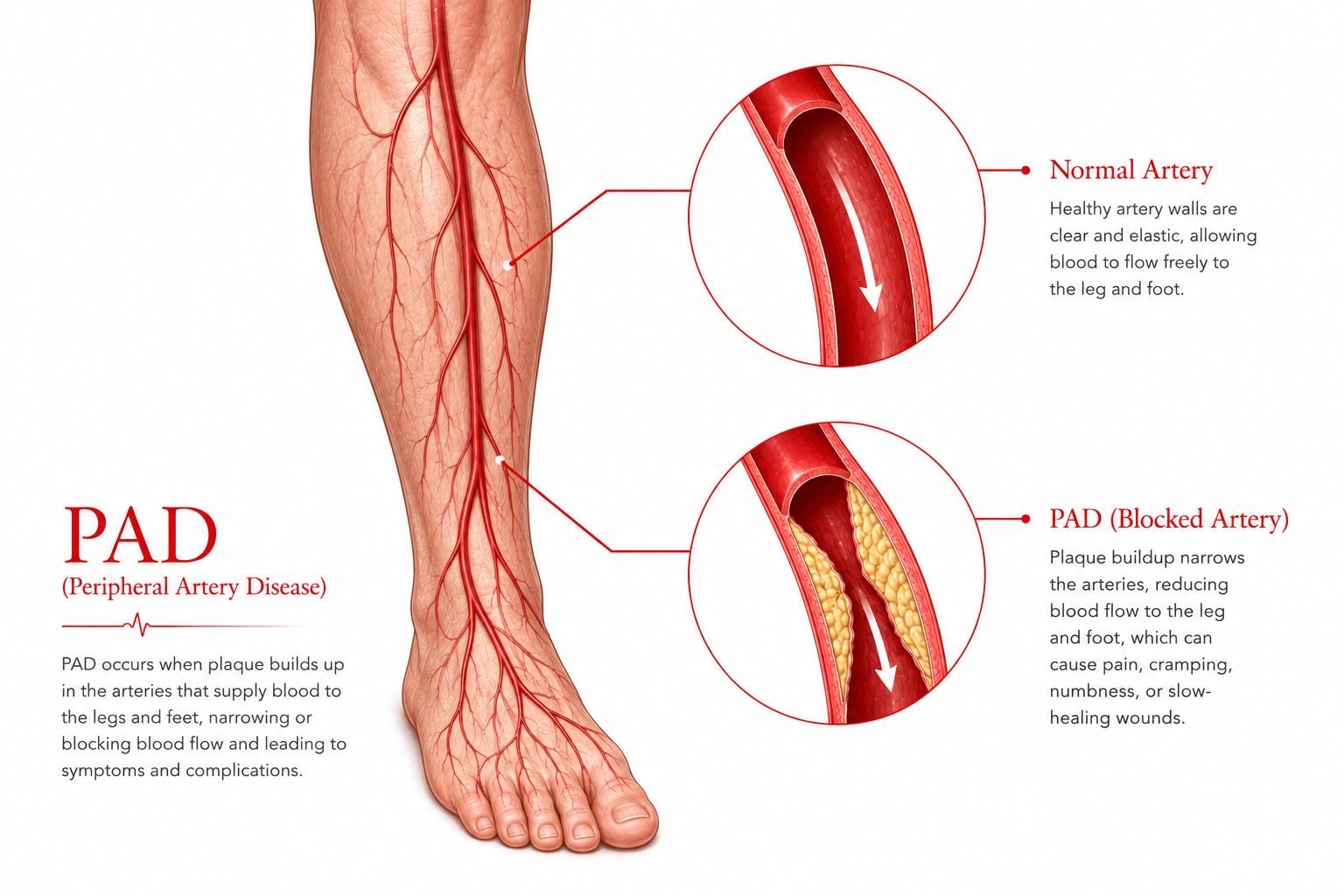
Peripheral Artery Disease (PAD) is a narrowing or blockage of the arteries that carry blood to the legs and feet. The cause is almost always atherosclerosis - the same plaque buildup that causes coronary artery disease and stroke.
As blood flow drops, muscles don't get the oxygen they need during activity. The earliest sign is usually leg pain when walking. In advanced cases, blood flow becomes so restricted that wounds won't heal, and tissue can be lost.
PAD affects an estimated 12–20% of adults over age 60, but many cases are missed because symptoms can be subtle or mistaken for arthritis, aging, or back problems. PAD is also a strong predictor of heart attack and stroke - diagnosing PAD often means catching cardiovascular risk earlier overall.
How MVM treats PAD.
Patients and referring physicians choose MVM for PAD because we offer the full pathway under one roof - diagnosis, intervention, and long-term follow-up.
- Same-week consults. New PAD patients are typically seen within 5 business days. For limb-threatening symptoms, same-day evaluation when possible.
- In-office vascular testing. Ankle-Brachial Index (ABI) and Doppler ultrasound are done in our office - no separate imaging appointment, results the same visit.
- Endovascular suite. Angioplasty, stenting, and atherectomy are performed at our Kendall Procedural Suite - outpatient, minimally invasive, in a focused vascular environment.
- Limb preservation program. Many patients told they need amputation are candidates for revascularization. We routinely accept second-opinion referrals from primary-care physicians and other specialists.
- Coordinated wound care. Partnered with podiatry and wound-care specialists across South Florida for advanced or non-healing cases.
- One specialist, full continuum. The doctor who diagnoses you also performs your procedures and manages your follow-up. No handoffs.
Schedule a PAD consultation.
Most patients are seen within a week. Bring any prior imaging, your medication list, and a written summary of your symptoms.
Schedule a consultationSend us a PAD referral.
Same-week consults for routine cases; same-day for limb-threatening symptoms. Closed-loop reporting back to your office within 48 hours of the visit.
Referral processCommon PAD symptoms.
Symptoms vary by severity. Many people with early PAD have no symptoms at all.
- Leg or calf pain when walking (claudication) that improves with rest
- Numbness or weakness in the legs
- Coldness in a lower leg or foot, particularly compared to the other side
- Sores on toes, feet, or legs that won't heal
- Color changes in the skin of the legs (pale, blue, or reddish)
- Hair loss or slower hair growth on the legs and feet
- Slower toenail growth
- Weak or absent pulse in the leg or foot
- Erectile dysfunction in men - often an early vascular signal
Who is most at risk.
- Smoking (current or past) - the single biggest modifiable risk factor
- Diabetes - sharply increases PAD risk and severity
- High blood pressure
- High cholesterol
- Age over 50, especially after 65
- Family history of PAD, heart disease, or stroke
- Chronic kidney disease
- Sedentary lifestyle
How we diagnose PAD at MVM.
Most patients leave their first visit with a clear diagnosis - and a plan.
- Focused history and exam - including pulse check and skin/wound assessment
- Ankle-Brachial Index (ABI) - a quick, painless in-office test comparing blood pressure at the ankle vs. the arm
- Vascular ultrasound - Doppler imaging of leg arteries, performed in our office the same visit when indicated
- Advanced imaging when needed - CT angiography (CTA) or MR angiography (MRA) to map disease before a procedure
Treatment options.
PAD is treatable at every stage. The plan depends on severity, anatomy, and your other health conditions.
Lifestyle and medical management
Most PAD patients benefit from a structured walking program, smoking cessation, and medical therapy - including antiplatelet drugs, statins, blood-pressure control, and diabetes optimization. Many patients improve significantly with consistent management alone.
Minimally invasive procedures
When medical therapy isn't enough - or when limb circulation is threatened - we offer endovascular procedures at our Kendall Procedural Suite:
- Balloon angioplasty - opens the narrowed vessel
- Stenting - holds the vessel open long-term
- Atherectomy - physically removes plaque
These are outpatient procedures performed through a small access point in the groin or arm. Most patients return home the same day.
Recovery
Light walking is encouraged within 24 hours. Most patients are back to normal daily activities within 2–3 days, with heavy lifting and driving held back 5–7 days. We see you at the 2-week mark to check the access site and review imaging, then space follow-ups out based on how things look.
When to see a vascular specialist.
- Leg pain when walking that improves with rest
- Any non-healing sore on the legs or feet
- A new PAD diagnosis you want reviewed
- An imaging finding (CT, MRI, ultrasound) suggesting arterial disease
- A recommendation for amputation - please get a second opinion before scheduling
If your symptoms are limb-threatening - sudden coldness, severe pain, color changes - call our office immediately or go to the nearest emergency room.
PAD FAQs.
Is PAD reversible?
PAD itself doesn't usually reverse, but blood flow can often be restored - through lifestyle change, medication, and (when indicated) minimally invasive procedures. Most patients see significant improvement in pain, walking distance, and wound healing once the right plan is in place.
Can I avoid surgery for PAD?
Many PAD patients are managed without any procedure at all. When a procedure is needed, it's usually a minimally invasive, outpatient endovascular treatment - not open surgery. We use the least invasive option that will solve the problem.
Does PAD raise my risk for other problems?
Yes. PAD is a marker of systemic atherosclerosis, so people with PAD are also at higher risk for heart attack and stroke. Treating PAD includes addressing those whole-body risks - which is part of why a cardiovascular specialist is the right team.
How often will I need follow-up?
Most stable PAD patients are seen every 3–6 months. After a procedure, follow-up is more frequent at first, then spaces out. We coordinate closely with your primary care physician.
I was told I need an amputation. What should I do?
Get a second opinion before scheduling. A meaningful percentage of patients told they need amputation are candidates for limb-saving endovascular procedures. We see second-opinion referrals quickly - call our office and tell the team it's a CLI / amputation question.
Schedule a PAD consultation.
Most new patients are seen within a week. Bring any prior imaging, the medication list, and a written summary of your symptoms - we'll do the rest.